Dedicated graphics cards could soon be a thing of the past, if AMD has anything to say about it. A recent leak from the GeekBench benchmarking software database has flagged up a test result from an unreleased AMD Ryzen 7 7840HS processor - more specifically, the OpenCL test incorporated into GeekBench has revealed that this chip runs AMD’s new Radeon 780M integrated graphics.
Why is this interesting? Well, the Radeon 780M appears to be seriously impressive as far as on-chip iGPUs go - the benchmark results show an OpenCL performance score of 36,757, which is roughly comparable to Nvidia’s GTX 1650.
Sure, the GTX 1650 was not exactly one of the best graphics cards - in fact, it was so underwhelming that we didn’t even bother reviewing it when it launched back in 2020, and we wouldn’t really recommend it to anyone today. Not while the GTX 1660 Super and RTX 3050 exist, anyway.
But nonetheless, it’s a powerful demonstration of what AMD’s APUs (that’s the term AMD uses for CPUs with built-in iGPUs) are capable of - and a warning sign for graphics competitor Nvidia. If the Radeon 780M iGPU is capable of this performance now, who knows what heights AMD could reach in the future?
Opinion: Nvidia has ruined the graphics card market - it’s time for a reset
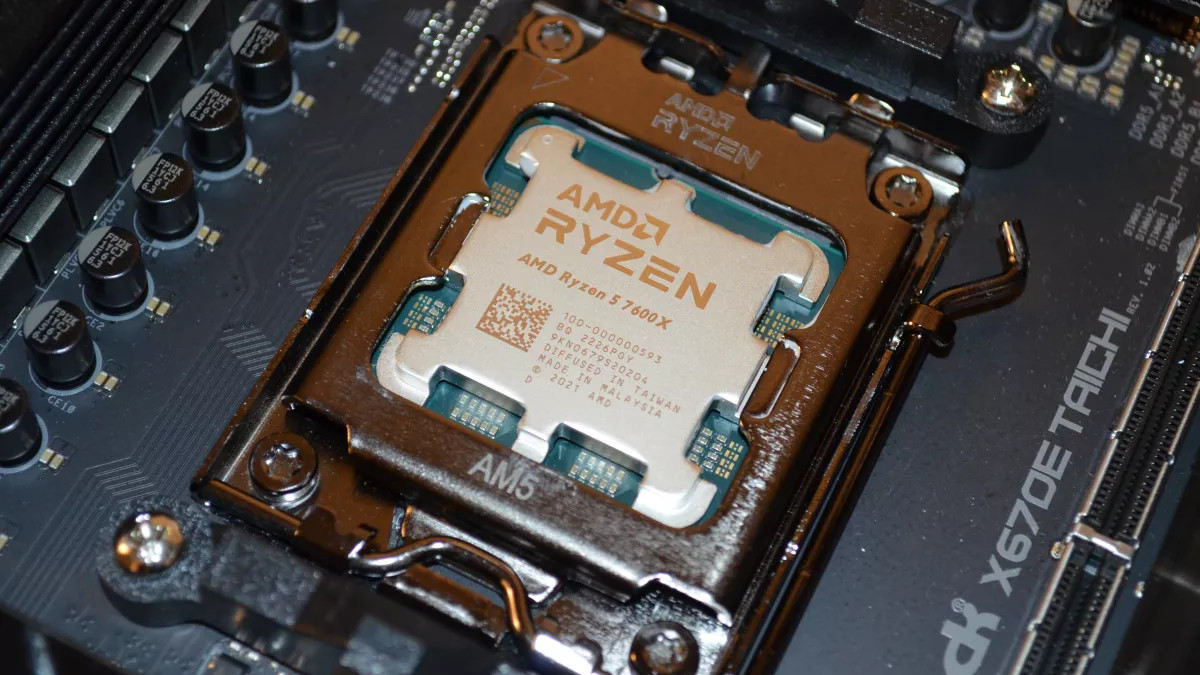
Digging into the details here, the Ryzen 7 7840HS is one of AMD’s ‘Phoenix’ APUs, using TSMC’s 4nm manufacturing process and using 8 ‘Zen 4’ cores, with a maximum operating frequency of 5.1GHz. The TDP is apparently just 54W; for comparison, the power draw of the Nvidia GTX 1650 is 75W, and that’s without also carrying a full CPU.
According to the GeekBench leaks, the chip appears to be in a Chinese test unit of an unnamed notebook, with 32GB of RAM. Interestingly, the Radeon 780M iGPU appears to be based on AMD’s older RDNA 2 graphics architecture, meaning that future APUs should deliver even more power on RDNA 3 and 4.
Considering that AMD has already demonstrated some very impressive graphical chops in its processors across various consoles - the PlayStation 5 and Valve Steam Deck are great examples of strong gaming performance without a dedicated graphics card - I really do have to question how long it’ll be before integrated graphics finally makes discrete GPUs entirely redundant for gaming.
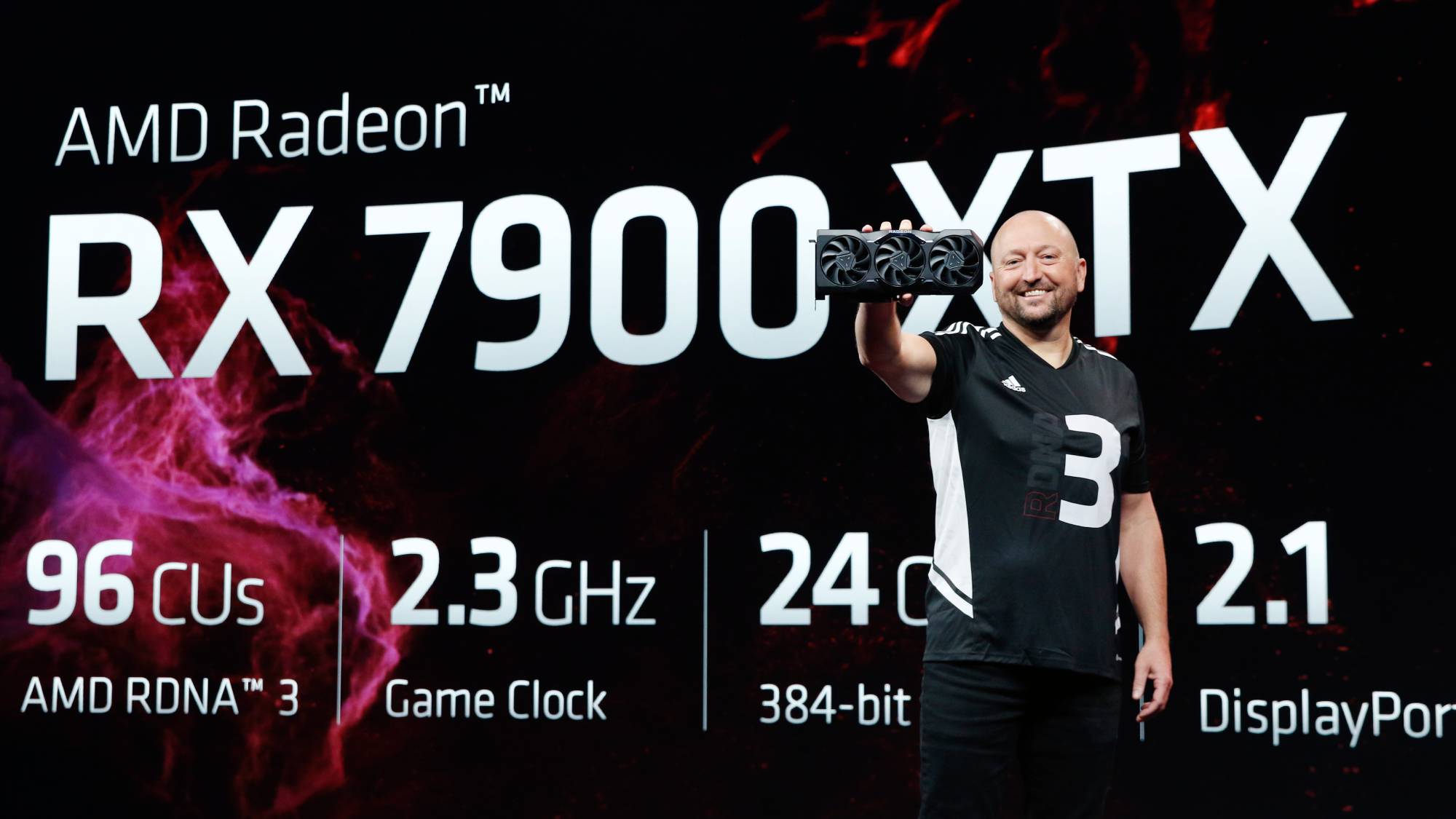
AMD has a real chance to become the first port of call for PC gamers
AMD already offers some of the best processors for gaming on PC, with excellent chips like the mighty Ryzen 9 7950X3D and the more mainstream Ryzen 7 7700X. But Team Red still struggles to compete with Intel’s high-end Intel Core i9-13900K in raw CPU performance, and its desktop APUs aren’t quite on the same level yet - the Ryzen 7 5700G is okay for gaming, but we’ve yet to see any G-series Ryzen 7000 APUs hit the market properly.
Nvidia has been pumping up performance - and prices - in the discrete GPU market for a while now, with its latest flagship effort, the GeForce RTX 4090, starting at a whopping $1,499 (and you’ll be lucky to find it at that price).
A key benefit of AMD’s APUs is that they’re massively better value; for starters, you’re getting a CPU and GPU in one product, and they don’t have the ludicrous power draw (or cable-melting controversies) of Nvidia’s high-end cards. That’s not even to mention the fact that with sufficient cooling, they can be easily squeezed into more compact devices such as handheld consoles or the best ultrabooks.
Of course, AMD does produce its own discrete graphics cards, but let's be real here: Team Red holds a pretty minuscule fraction of that market compared to Nvidia, and Intel has been muscling in on its share of the budget GPU space with some very aggressive pricing on the new Intel Arc cards.
I’ve spoken in the past about how integrated graphics could prove to be the next frontier of PC gaming, and I really hope that AMD continues to lean into the potential of its gaming APUs. We really might not be far off from these Phoenix chips overtaking the best cheap graphics cards - and if AMD can manage that, Nvidia might find itself relegated to selling GPUs for enterprise and AI-training purposes rather than enjoying its current gaming market dominance.
Comments