After a few weeks of growing rumors, it now looks very likely that we'll see the DJI Mavic 3 Pro – the latest model in the drone giant's flagship consumer series – land on April 25.
DJI has released a teaser for an event on that date, with the main image showing a triple-lens camera array that we've seen crop up in all the Mavic 3 Pro leaks so far. But what else do we know about the incoming drone and why is it an exciting launch?
While it took a while for the DJI Mavic 3 to find its feet after a slightly rushed launch at the end of 2021, it's now undoubtedly one of the best drones you can buy. It combines a Four Thirds cameras, adjustable aperture, a telephoto lens and improved obstacle avoidance into a pretty compact, folding design.
Based on the leaks so far, the DJI Mavic 3 Pro will offer similar flying power, only with the benefit of three cameras – with the latest rumors predicting that there will be a 70mm lens (effectively offering 3x zoom) to offer a middle ground between its wide-angle and telephoto offerings.
But how much might this versatile flying camera cost and will it still manage to maintain the same image quality as its Mavic 3 peers? Here's everything we know so far, and what we'd like to see from the seemingly-imminent Mavic 3 Pro.
Cut to the chase
- What is it? DJI's first drone with a triple-lens camera
- When is it out? DJI has a launch event on April 25, so probably then.
- How much will it cost? It isn't yet clear, but likely more than the DJI Mavic 3, which launched for $2,199 / £1,879 / AU$3,099.
DJI Mavic 3 Pro release date and price predictions
The DJI Mavic 3 Pro will now almost certainly be announced at DJI's event on April 25, which kicks off at 9am EDT / 2pm BST / 11pm AEST.
DJI's teaser for the event shows a triple-lens Hasselblad camera setup, which is the same as the one we've seen in leaked photos for the DJI Mavic 3 Pro.
A little harder to predict is the Mavic 3 Pro's price. There haven't been any major leaks on that front yet, so all we have to go on are estimates based on existing models in the series.
Based on the table above, it seems likely that the DJI Mavic 3 Pro with a DJI RC controller will cost more than $2,100 / £1,800 / AU$3,000, given it's the 'Pro' model in the lineup. Though this will depend on its camera setup and other specs.
One possible price hint we have seen was spotted by DroneXL on the drone's Google Search results page, which showed the retailer Vertigo Drones listing a DJI Mavic 3 Pro with a DJI RC Pro controller for $3,628 in the US.
Given the DJI RC Pro controller is pricier than the standard DJI RC controller by $890 / £624 / AU$1,130, that suggests we could be looking at a price for the Mavic 3 Pro with a DJI RC controller of around $2,700 / £2,300 / AU$3,900, as a very rough ballpark.
Of course, there's no guarantee that the Mavic 3 Pro will be available to buy on launch day, with some rumors suggesting pre-orders ahead of shipping in May. But we'll know for sure in just a few days.
DJI Mavic 3 Pro news and leaks
The DJI Mavic 3 Pro leaks have been growing since early April – and while there's still a lot we don't know about the drone, we have a good overall picture of what to expect.
On April 5 the reliable DJI leaker @DealsDrone shared the one of the first images of the Mavic 3 Pro's packaging, which revealed both its triple-lens camera and its DJI RC Pro Fly More Combo bundle.
Mavic 3 Pro combo with RC Pro pic.twitter.com/fTfIMwk4e6April 5, 2023
This leak suggested the DJI Mavic 3 Pro's third camera would "support 3x zoom". And this is something we've seen in further leaks, like one shared by fellow DJI leaker @JasperEllens, which show the drone will offer 3x and 7x zoom options, alongside the main wide-angle camera.
This versatility is likely to be the Mavic 3 Pro's main differentiator from the current DJI Mavic 3 (which has two cameras) and the Mavic 3 Classic (which has one 20MP Four Thirds camera).
like Mavic 3 Pro the more you look at it? pic.twitter.com/SDsHxRn0hlApril 20, 2023
What we don't yet know for sure are the focal lengths and sensor sizes of those three cameras. The focal lengths are a little easier to discern, based on the current DJI Mavic 3 – if it follows that drone, the Mavic 3 Pro could offer a 24mm lens, a 70mm mid-telephoto, and a 162mm telephoto offering.
According to speculation from @Quadro_News on April 20, though, the Mavic 3 Pro's main camera could be quite different from its two siblings. Both the DJI Mavic 3 and Mavic 3 Classic have a 20MP Four Thirds camera, whose large sensor has set a high benchmark for compact drones. This makes both of those models two of the best drones you can buy.
These photos show the DJI Mavic 3 Pro Cine, a wide-angle lens option, and several other variations of the DJI Mavic 3 Pro drone. Now that the DJI Mavic 3 Cine and Mavic 3 Standard have already reached their end-of-life, it makes sense... @djiglobal https://t.co/GrTOEEzWhzApril 21, 2023
But that Quadro_News leak suggests that the Mavic 3 Pro's main camera will instead be a 48MP 1/1.3in affair, which has the same specs as the one we've seen on the DJI Mini 3 Pro. That would be a slight surprise considering Pro models are traditionally DJI's flagships, but perhaps the versatility of three lenses is the premium experience that will justify that billing.
Those leaks do also suggest that the 70mm camera will shoot 4K/60p video and timelapses, while the 7x telephoto (taken from the Mavic 3) will apparently see its aperture brightened slightly from f/4.4 to f/3.4.
So far, those are all the leaked specs we've seen so far for DJI's latest Mavic drone. Given its body is closely related to the DJI Mavic 3, it seems likely that it'll take the same LiPo 4S batteries as that drone, which promise a generous 46-minute flight time.
We'd also expect to see the same O3+ connectivity, which promises a maximum transmission distance of 15km (in the US) and 8km in other regions.
DJI Mavic 3 Pro: What we want to see
The DJI Mavic 3 has blossomed into one of the best DJI drones you can buy, thanks to a series of firmware updates that belatedly added a lot of the features that were promised at launch.
But it's still far from the perfect drone, so here are five improvements we'd like to see on the DJI Mavic 3 Pro.
1. A better battery life
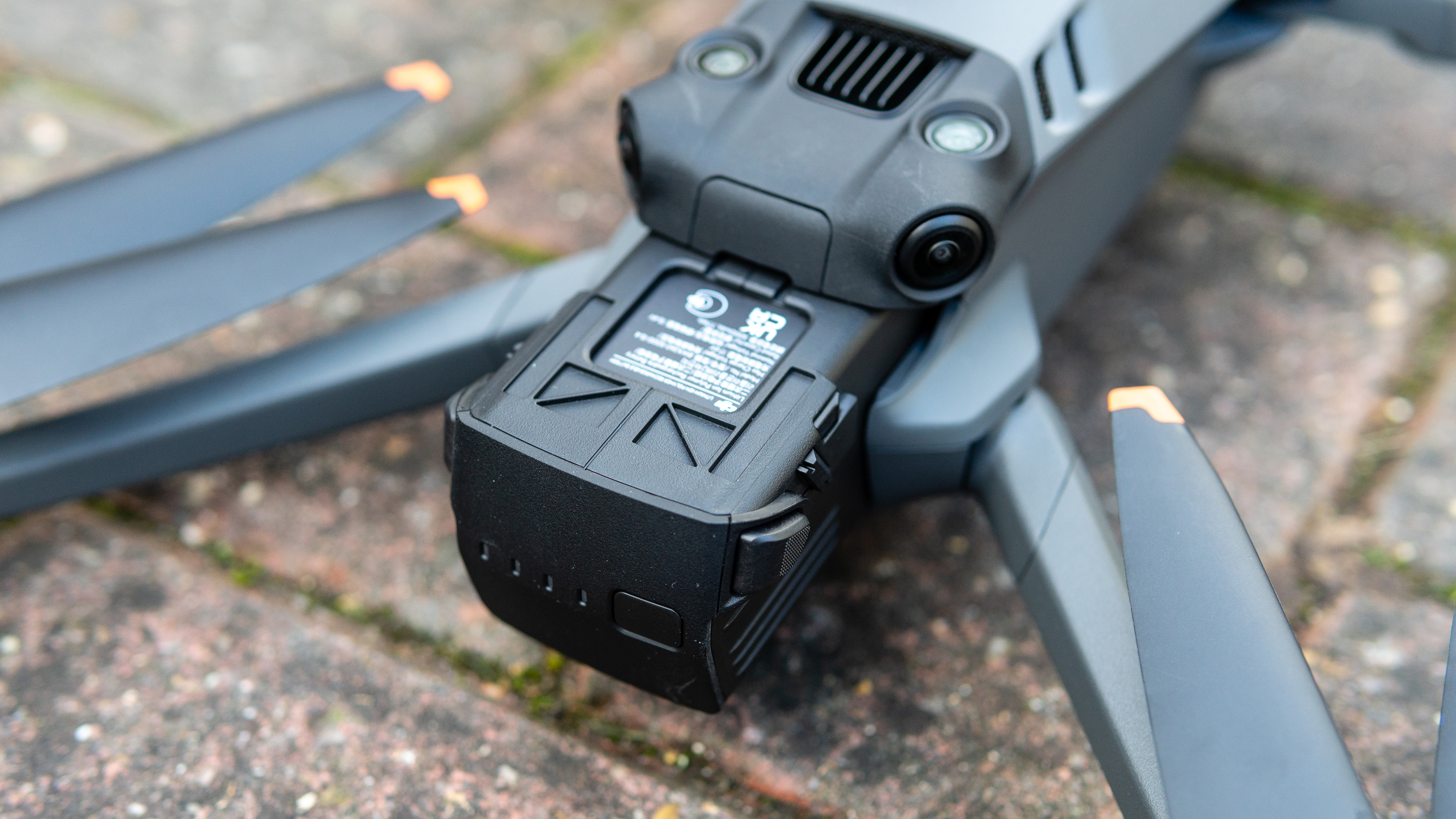
It seems likely that the DJI Mavic 3 Pro will use the same LiPo 4S batteries as the Mavic 3 – and while they're perfectly adequate, we have found that the Mavic 3 falls short of its advertised battery life in real-world use.
While that drone's headline battery life figure is 46 minutes of flight time, we've generally found real-world times to be closer to 30 minutes. Hopefully some optimizations and improved power management will get this a bit higher on the Mavic 3 Pro.
2. A sub-900g weight

For drone fans in Europe, the 900g weight barrier is an important one because that's the maximum takeoff weight for drones to qualify for a 'C1' class label. These labels determine where a drone can be flown – for example, only C0 and C1 class drones can fly over people (if not over 'assemblies of people').
Last year, the DJI Mavic 3 became the first drone to be given a 'C1' certificate for flying in the EU. After a firmware update, this meant owners could fly the drone in the 'A1 Open Category'. Hopefully, the DJI Mavic 3 Pro will be in the same boat – and given its similarities to the Mavic 3, it'd be a surprise the new drone missed that mark.
3. A better telephoto lens
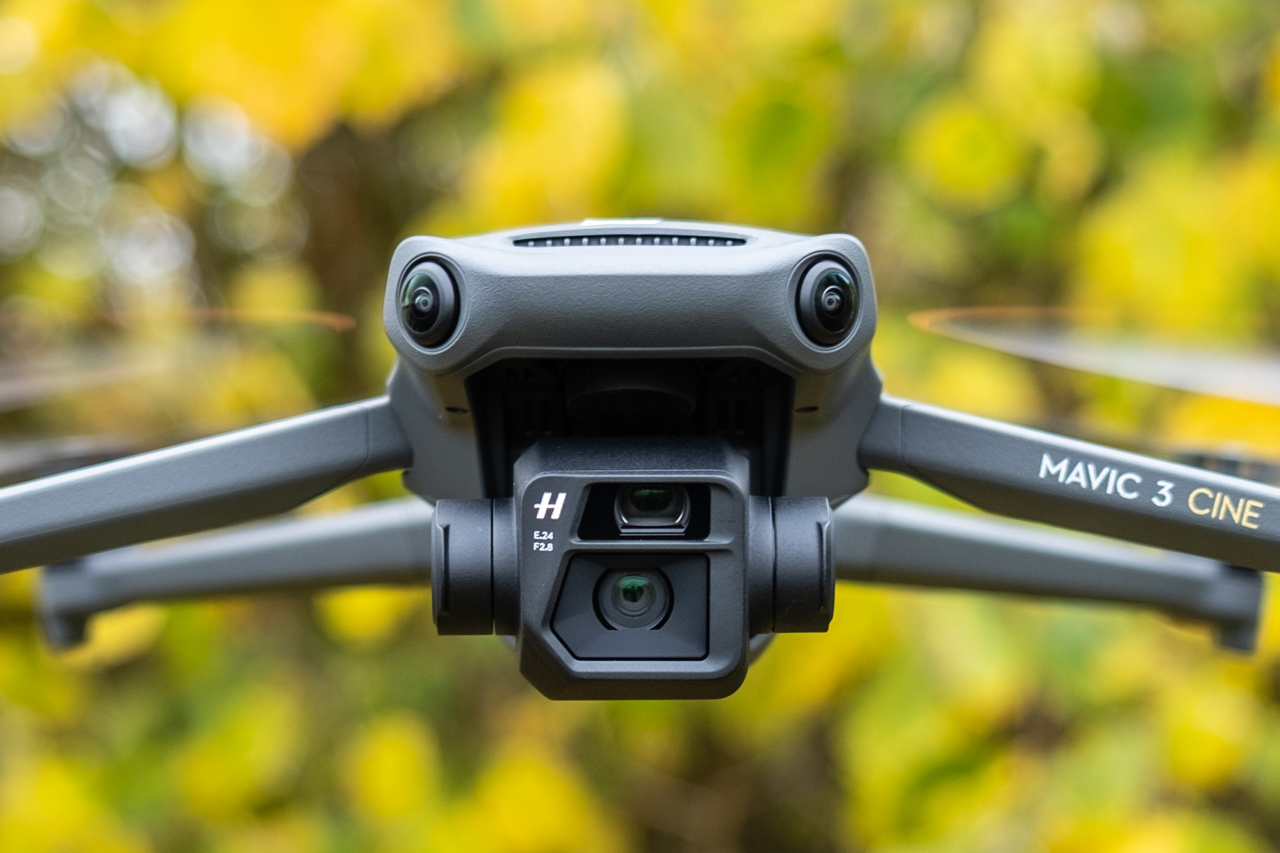
The DJI Mavic 3's 162mm telephoto camera is a substantial step down in quality compared to its 24mm main camera, mainly due to its 1/2in sensor size (which is seven times smaller than its Four Thirds chip).
Combine that with the pretty dark f/4.4 aperture and you have a tough job on your hands getting any high quality footage out of it. While it probably won't be possible to increase this camera's sensor size on the Mavic 3 Pro, some tweaks like a brighter aperture and manual exposure settings would give it a boost in quality.
4. More built-in storage

It looks likely that the DJI Mavic 3 Pro Cine version will again offer 1TB internal storage, just like its equivalent version on the Mavic 3. But we'd like to see the non-Cine version get a bump up from the 8GB storage we saw on that standard Mavic 3.
Yes, you can top that up with the microSD card slot, but the files the Mavic 3 records are huge and you'll soon fill up that internal space. A boost to 16GB would be very welcome, as long as it doesn't inflate the price too much.
5. A mid-telephoto lens that isn't a novelty

The difference between the DJI Mavic 3's main camera and its telephoto one is so vast that many owners barely use its 162mm lens, despite its creative potential. The latter has a 1/2-inch sensor and it's difficult to match its video quality to the footage shot by its main camera, which means it's often tricky to achieve consistency across a single shoot.
While limited space on the Mavic 3 Pro's gimbal will make it difficult for its rumored 70mm camera to offer a huge boost in quality, we hope it has a larger sensor than the Mavic 3's telephoto lens and also supports higher-end features like D-log recording, 4K/60p video and perhaps even Apple ProRes.
Comments