
Lenovo Legion Go is the powerhouse the handheld gaming market was missing

First it was the Steam Deck then we had the Asus ROG Ally, and now Lenovo is jumping into the fray as the company has officially revealed its new handheld gaming device – the Legion Go.

Arguably the most eye-catching aspect out of everything the Lenovo Legion Go has to offer are the detachable TrueStrike controllers. Similar to the Nintendo Switch Joy-Cons, they feature two joysticks, a directional pad, and a variety of face buttons. Fairly standard stuff. 

But that’s where the similarities end because these TrueStrike controllers are capable of so much more. In total, you have 10 – yes, 10 – mappable shoulder buttons: two triggers, two bumpers, four in the back (two on each controller), plus an extra pair of inputs on the edges. 
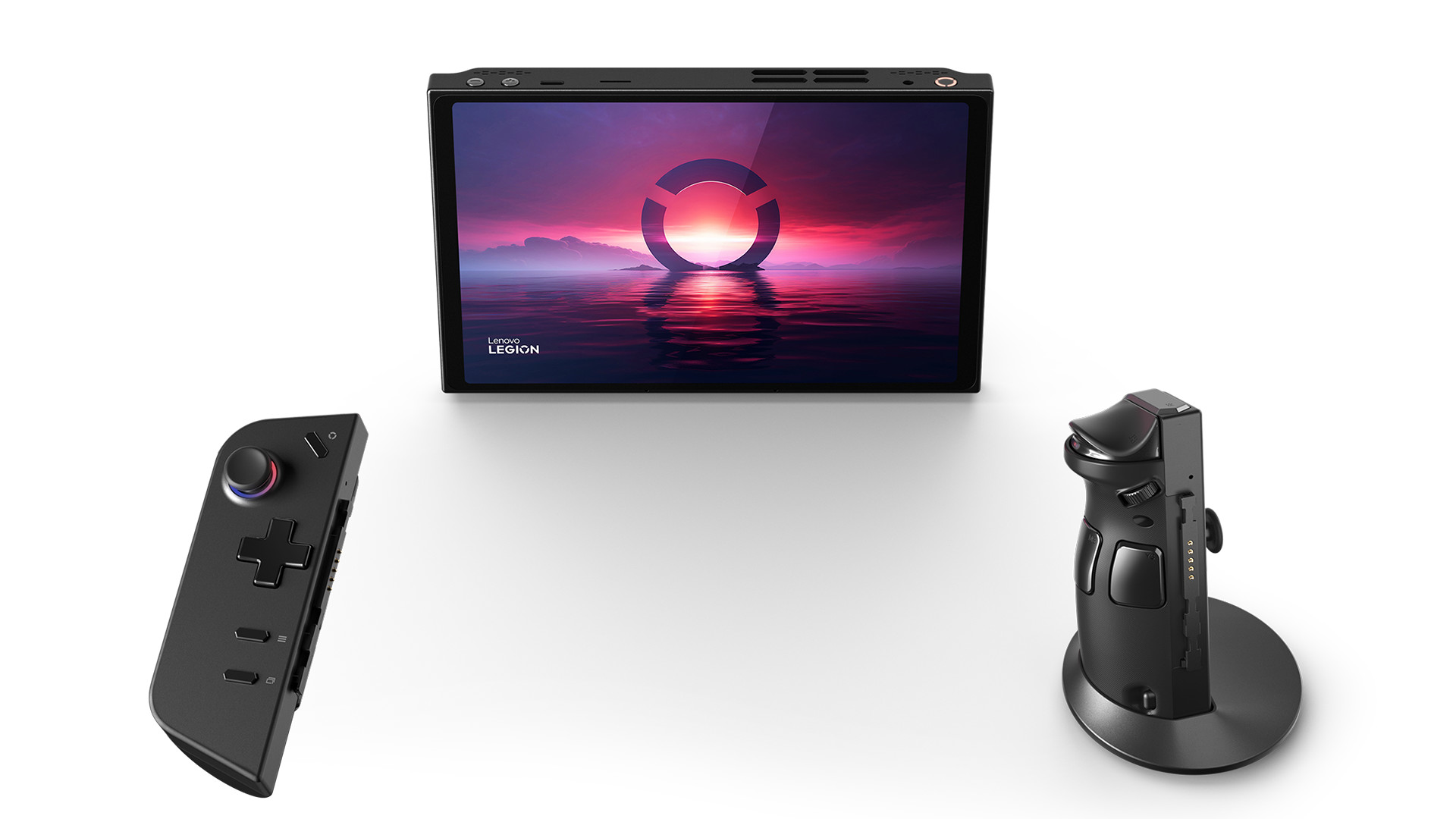
Lenovo Legion Go controller mouse

(Image credit: Lenovo)

If that wasn’t enough, the right controller has a track pad on the front for controlling an on-screen cursor with a mouse wheel on the back for scrolling. On the bottom of the controller is an optical “eye”. When placed inside the accompanying stand, the "eye" can help the peripheral serve as a rudimentary gaming mouse.

Needless to say, the Legion TrueStrike controllers on the Legion Go totally blow the Switch’s Joy-Cons out of the water. It even comes with RGB lighting around the power button. Not only that, Lenovo’s hardware sports “hall effect joysticks” meaning no frustrating controller drift like you might experience on the Switch.

Notable features

Of course, there is more to the Legion Go besides the controllers. 

The display is a 8.8-inch Lenovo PureSight gaming touchscreen, according to the company. With an aspect ratio of 16:10, it outputs a Quad HD Plus (2560 x 1600 pixels) resolution with a refresh rate of up to 144Hz. The display is “capable of up to 500 nits [of] brightness”, covering “97 percent [of the] DCI-P3 color gamut”. Essentially, the screen looks fantastic.

Under the hood you have an “AMD Ryzen Z1 Extreme processor” alongside an AMD RDNA graphics card which is the exact same type of hardware present on the ROG Ally. It also has 16GB of LPDDR5X RAM on board. So if you have tried out the ROG Ally, you can expect a similar level of performance on the Legion Go. 

Storage peaks at 1TB although you can expand it by an extra 2TB via micro-SD card.
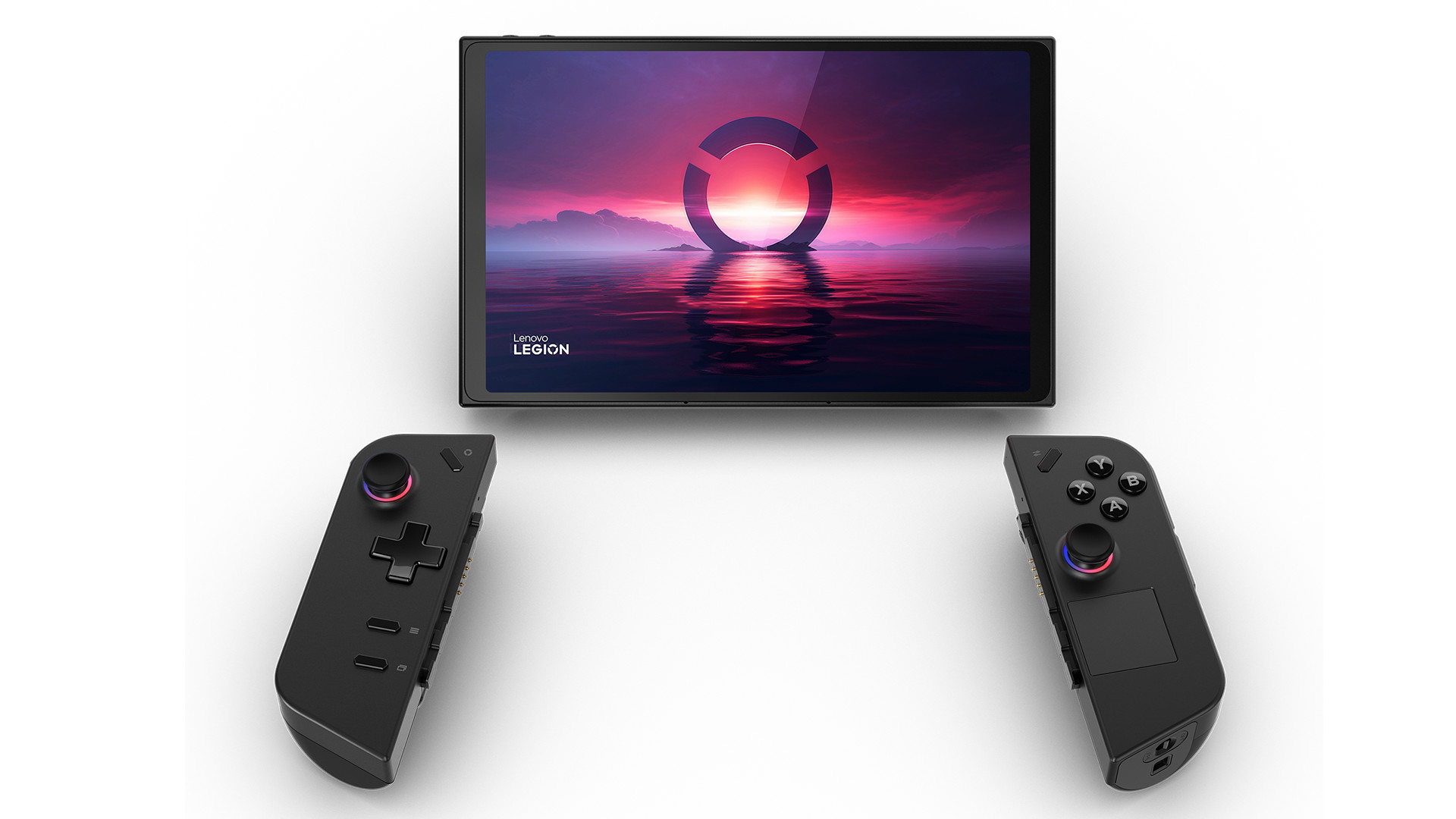
Lenovo Legion Go controllers

(Image credit: Lenovo)

With all this hardware, the Legion Go will be quite power hungry. Lenovo is equipping its handheld with a 49.2Wh (watt-hour) battery. It supports the company’s proprietary Super Rapid Charge tech, “allowing the battery to recharge up to 70 percent” in about 30 minutes.

Other notable features include power bypass mode to “protect the battery from [deterioration]” and a kickstand on the back to prop up the Legion Go.

Availability

Color us impressed. Lenovo is entering the handheld scene guns ablaze. Neither the Steam Deck or Ally have opted for detachable controllers. We’re curious to know if Lenovo plans on releasing the TrueStrike on their own so we asked. This story will be updated if we hear back.

The Lenovo Legion Go launches on October 31 with prices starting £699/€799. That's roughly $875 USD, making it more expensive than both the Steam Deck and ROG Ally.

If you’re looking for something to play on your newly acquired Legion Go, be sure to check out TechRadar’s list of the best Steam games for 2023

YOU MIGHT ALSO LIKE


Comments

Popular posts from this blog

The latest Apple TV 4K test lets you watch four sports streams at once

Apple is trying something new with the latest beta version of tvOS 16.5: the option to watch up to four simultaneous streams at once. Right now it's limited to live sports streamed through the Apple TV app on the Apple TV 4K , specifically MLB Friday Night Baseball and the MLS Season Pass. A multi-view option was spotted in the tvOS software last month, but the code was hidden and not enabled. MacRumors reported that the feature would be enabled this weekend, and beta testers have since been able to use it. As yet multi-view hasn't been officially announced by Apple, but it's expected that tvOS 16.5 is going to be pushed out in its final form within the next month or so. WWDC 2023 is around the corner as well, when we should be hearing about the next major updates for Apple's various operating systems – including tvOS 17. How it works Over at 9to5Mac there's a hands-on demonstrating how the multi-view feature works, and it's pretty much as you would expe...

Quantum computers are fast becoming cheaper and smaller — and they could be coming to a data center near you very soon

IonQ claims we’re closer to widespread enterprise quantum computing deployment as it lifted the lid on two rack-mounted models that can be deployed on-premises.   The startup has built the fourth-generation #AQ35 IonQ Forte Enterprise and fifth-generation #AQ64 IonQ Tempo, both of which are designed to be deployed in enterprise and government data centers. It’s also said it is deploying two quantum computers to the US Air Force.  While revealing these two models, IonQ co-founder and CTO Jungsang Kim said quantum computers are already in use by enterprises to churn through machine learning workloads. This, he added, suggests we’re much closer to readily available and affordable machines. Priming enterprises for a quantum future “We believe in the enterprise-grade quantum computing, which is where it can be something of value for enterprises, can happen in the next few years as we build powerful enough quantum computers that can actually do things that classical computers w...

Nvidia RTX 4080 GPU could get cheaper with a new version – but don’t get your hopes up

Nvidia’s RTX 4080 is purportedly getting a new spin on the GPU which could reduce the cost, but any price reduction will likely be very minor, sadly, if it happens at all. Tom’s Hardware flagged up this rumor – and treat it with caution, as with anything from the ever-spinning mill – that originated from HKEPC (a tech site in Hong Kong), claiming that while the current RTX 4080 graphics card is built on the AD103-300 chip, Nvidia is going to use a slightly different GPU in the future, namely AD103-301. There’s now more evidence this is actually happening, Tom’s points out, courtesy of a graphics card maker, Galax, which under its RTX 4080 product details lists the GPU as ‘AD103-300/301’. Furthermore, VideoCardz , which also picked up on this, informs us that Gainward, another card maker, has also listed the updated GPU variant AD103-301 in its product specs. With two separate third-party graphics card makers mentioning this new spin on the GPU in their specs, it seems pret...