The Google Pixel 8 event didn't deliver any massive surprises, thanks to the huge number of leaks we've seen recently. But as is tradition, Google did use its big annual phone launch to reveal an array of new camera tricks that are equal parts impressive, useful, and downright creepy.
The actual camera hardware of the Google Pixel 8 and Pixel 8 Pro isn't anything particularly earth-shattering. The Pixel 8's rear cameras are largely unchanged from the Pixel 7, while the Pro version does get bigger upgrades with a new main camera, an improved ultra-wide, and a 48MP telephoto lens.
But it's been a while since sensor size and lens apertures were the biggest drivers of smartphone camera performance. These days, it's all about computational photography (and video) tricks, an art form that Google has pioneered. So what new modes did we get this year?
Quite a few actually, with Google's focus very much on video, in the form of Audio Magic Eraser and (for the Pixel 8 Pro, at least) new Video Boost and Night Sight Video features. But thanks to the combined powers of Google's Tensor G3 chip and some Google Photos algorithms, we also saw some powerful (and potentially controversial) new photography tricks in the form of Best Take and Zoom Enhance.
Here's a full breakdown of all of those new Pixel 8 and Pixel 8 camera tricks, starting with the one we're feeling most conflicted about.
1. Best Take
- Pixel 8 and Pixel 8 Pro

Let's start with what is arguably the most controversial new Pixel camera feature because it effectively lets you change the facial expressions of people in your group shots. Are you saying we aren't photogenic, Google?
The key thing is that Best Take isn't using generative AI to change a frown into a smile – instead, it takes a series of photos and then lets you pick the best facial expressions for your final shot.
That makes it far more palatable to those who think AI is ruining photography, as it's effectively just doing an automated Photoshop-style blend on a burst of shots. And in our early demos, it's surprisingly effective, with little sign of the uncanny valley giveaways we expected. But this is one we'll want to test to destruction before risking it on our wedding snaps.
2. Video Boost
- Pixel 8 Pro only
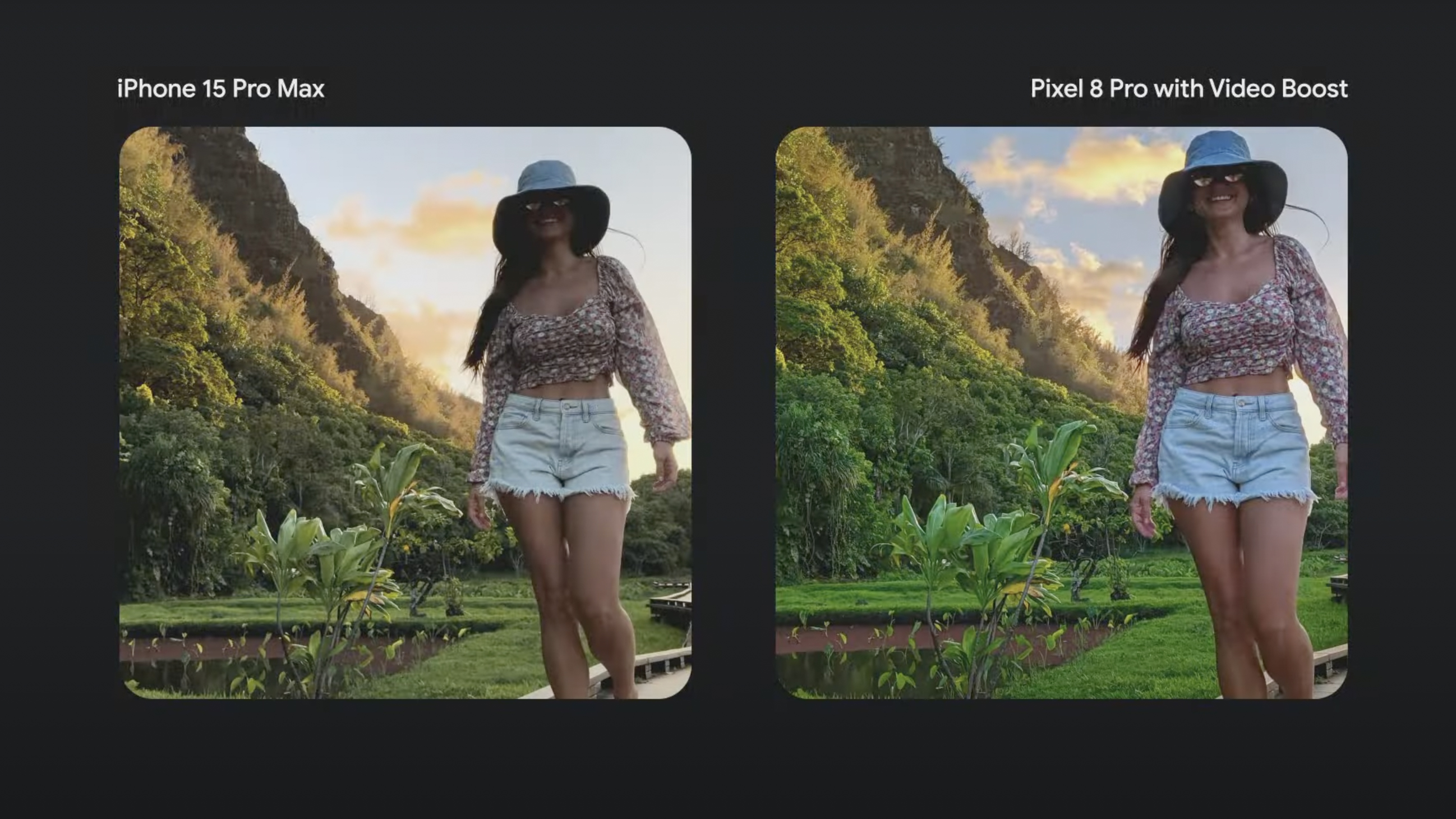
Google went particularly hard on new video features at its Made by Google event – and the biggest one was arguably Video Boost, which is coming to the Pixel 8 Pro in December.
In theory, this is computational video done properly – rather than messing about with trying to introduce fake bokeh like the iPhone's Cinematic Mode (which Apple has gone very quiet on), the Pixel 8 Pro's new mode instead processes every video frame using its cloud-based HDR Plus pipeline.
This is a huge technological feat and one that will involve a little wait for your boosted video. But the results could also be polarizing. Google was keen to show side-by-sides of Video Boost with the iPhone 15 Pro Max's video, pointing to its improved dynamic range and vivid color.
This saturated HDR look isn't necessarily to everyone's taste, though, so it could be one to reserve for particular situations (like high-contrast scenes).
3. Night Sight Video
- Pixel 8 Pro only
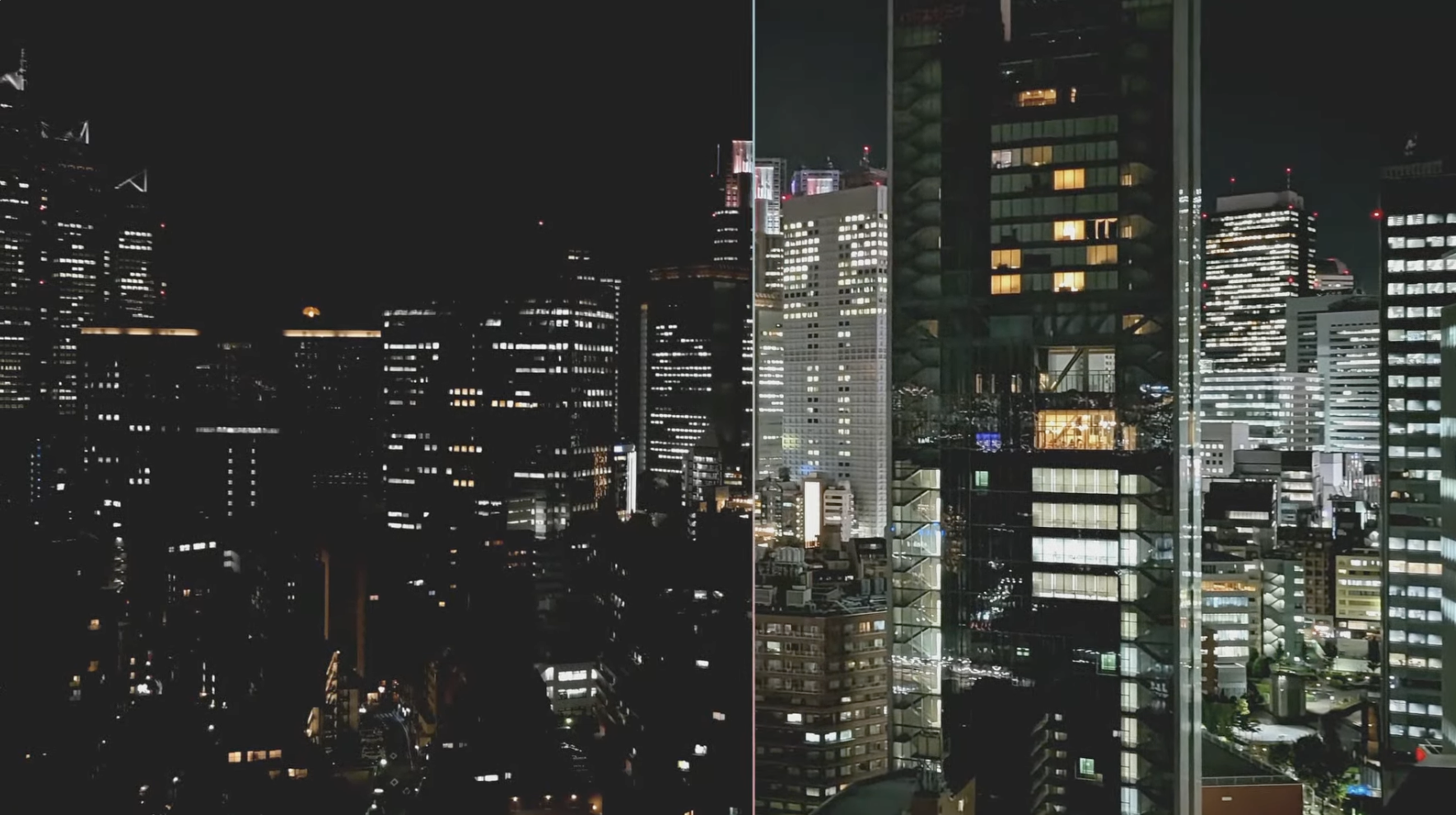
Google's Night Sight has been a hugely influential computational photography trick, and now it's coming properly to videos on the Pixel 8 Pro, from December.
Night Sight Video is effectively a low-light version of Video Boost, using multi-frame processing to enhance detail and exposure in dark scenes. Google claims the mode is the "best low-light video on any smartphone", which it says is based on third-party evaluation comparing major US smartphone brands.
While Google has announced a version of Night Sight for videos before at Google IO 2021, this effectively just stitched photos together to make an animation. We don't yet know what resolution and frame rates Night Sight Video is available for, but we're looking forward to taking it for a spin around a wintery London.
4. Audio Magic Eraser
- PIxel 8 and Pixel 8 Pro
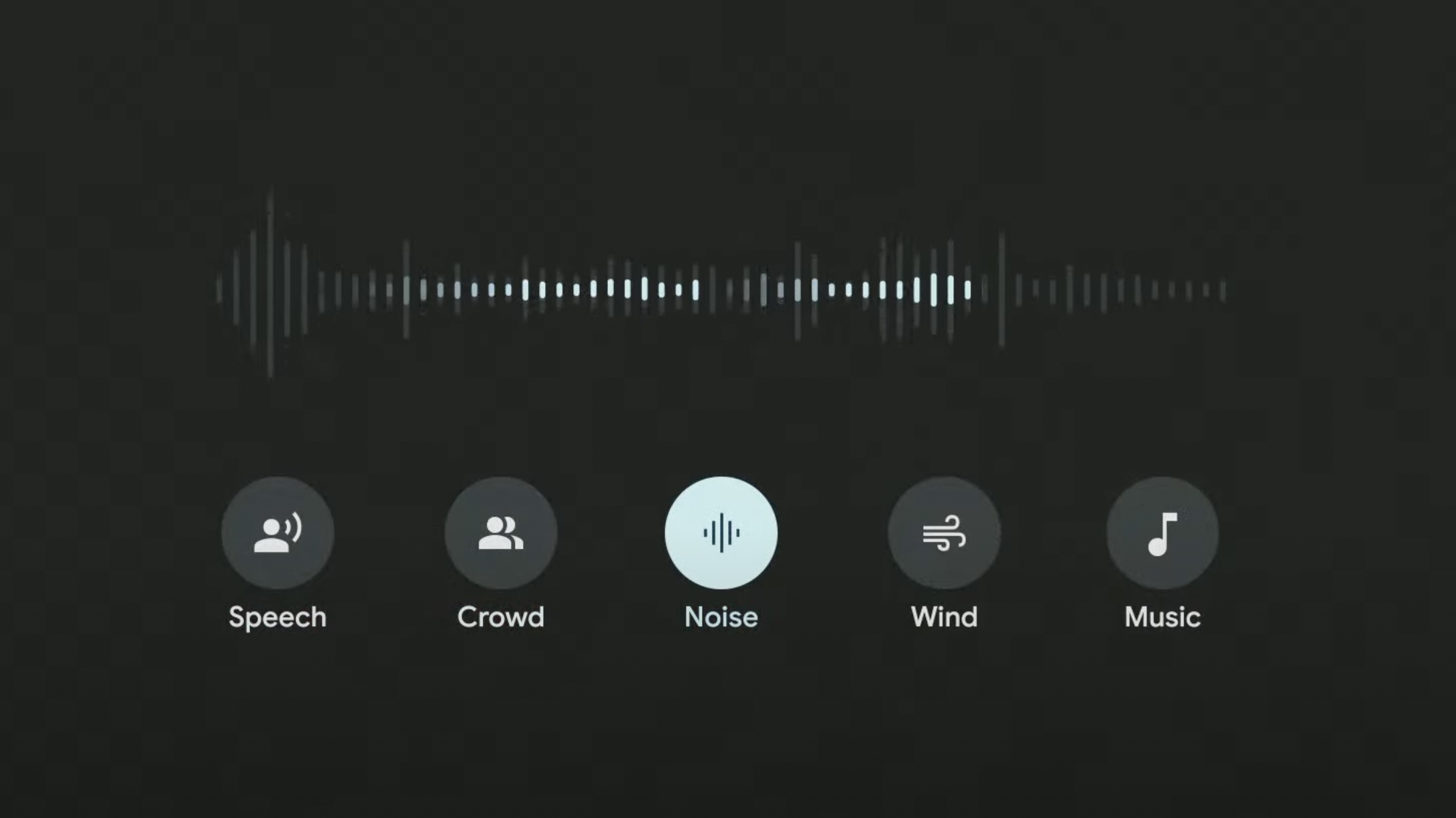
Audio quality has long been an afterthought in smartphone video, but Google's aiming to change that on the Pixel 8 and Pixel 8 Pro with a new 'computational audio' trick called Audio Magic Eraser.
This uses machine learning to recognize and divide the audio in your video into separate channels – for example, speech, crowd, wind, noise, and music. You can then turn off any unwanted ones.
Google's demo of a baby talking with a dog's loud background barking removed was impressive, but we'll be keen to test this in the field to see how much it impacts the quality of those individual sound layers.
5. Magic Editor
- Pixel 8 and Pixel 8 Pro

Back in May, Google announced that Magic Editor (a new generative AI trick that aims to make bad photos obsolete) was en route to select Pixel phones later this year. Well, now we know that those phones are the Pixel 8 and Pixel 8 Pro.
Magic Editor is effectively Magic Eraser on steroids, letting you pick and move objects in your photos, reposition them, and effectively become a Photoshop whizz without having to go anywhere near masking tools and adjustment layers.
It even gives you contextual suggestions on things to change, like swapping out your grey sky for a golden-hour sunset. Some will call it the death of photography. Others will see it as a massive time-saving crutch. Either way, the "experimental" feature will now be available in Google Photos on its latest Pixel phones.
6. Zoom Enhance
- Pixel 8 Pro only
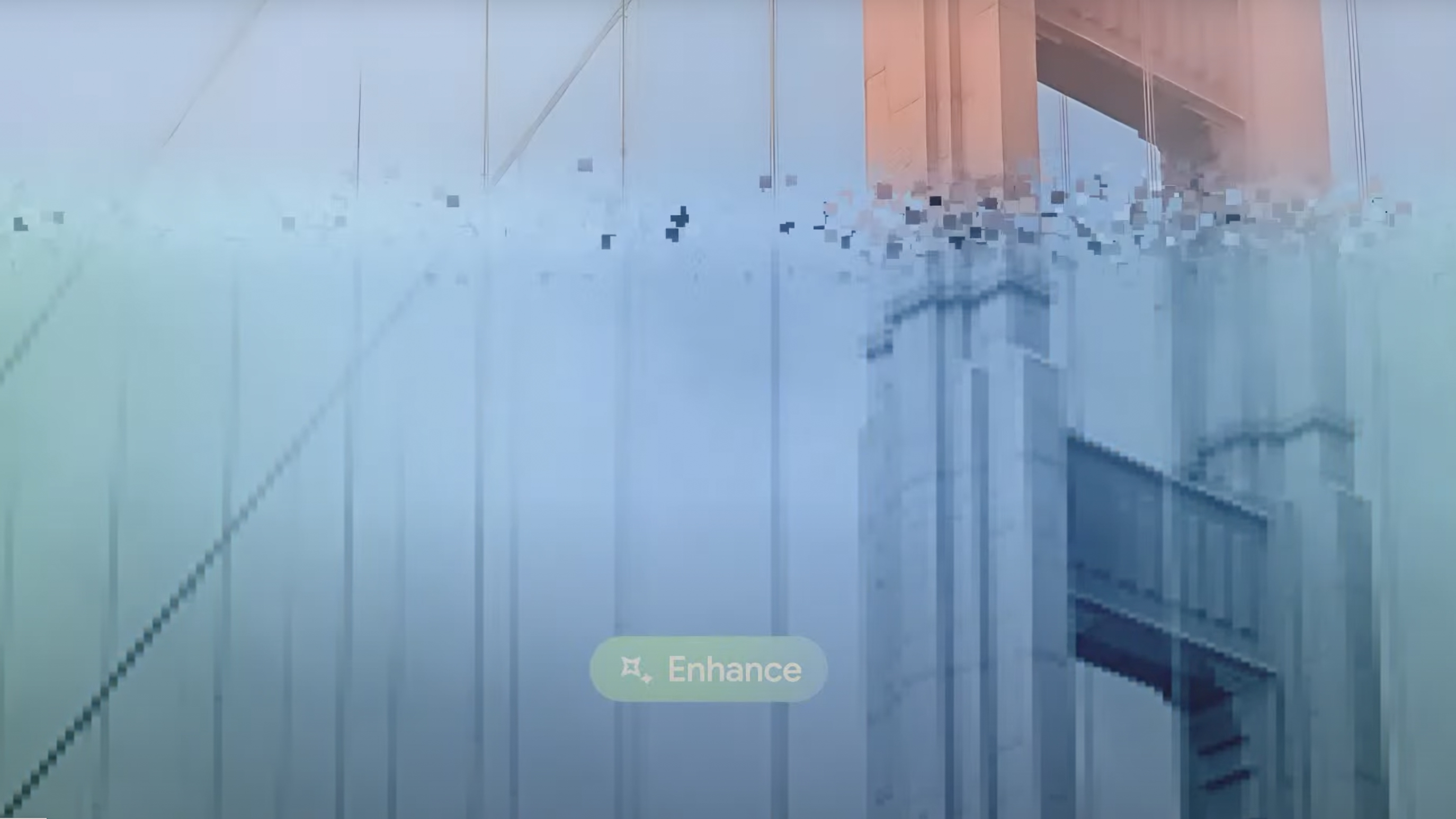
Google seems to take great delight in making sci-fi concepts an unsettling reality –see its Call Screen feature, which sees an AI robot interview the person calling you to see if they're worthy of being put through to the real you. Another slightly less chilling, but equally impressive feature, is Zoom Enhance.
Yes, the CSI:Miami 'Enhance' meme is going to get a few more hits today, as the Google Photos feature is the closest we've seen to a real-world equivalent – kind of. Because it's powered by generative AI, Zoom Enhance will very much invent some extra detail when you pinch to zoom into a photo.
That isn't a million miles from how interpolation works, though we doubt it'll stand up in court. Still, it does look like another impressive photographic trick to add to the PIxel 8 Pro's armory – and it even gives you an 'Enhance' button so you can pretend you're in a detective drama.
7. Pro Controls
- Pixel 8 Pro only
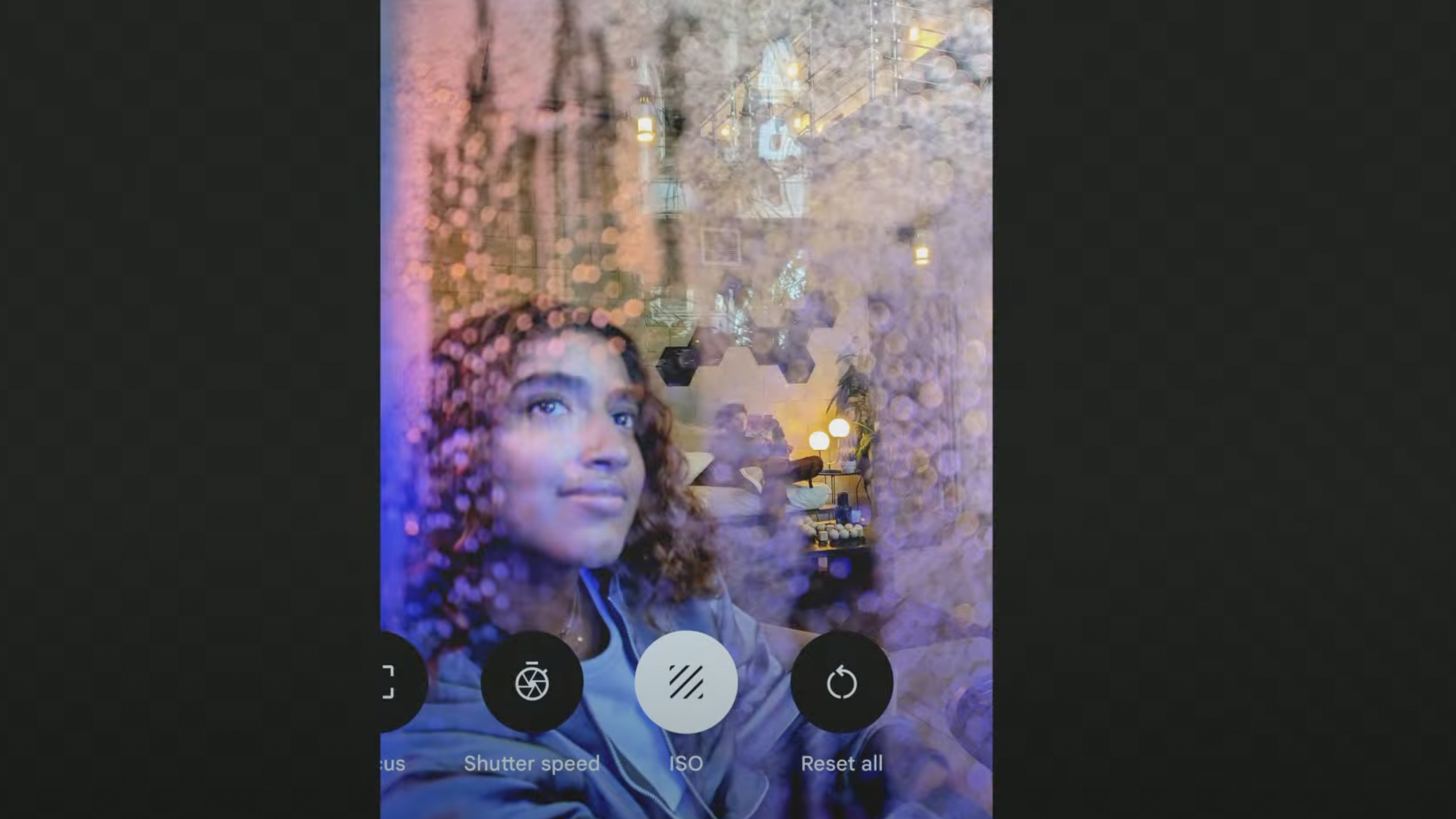
Apple's reluctance to build pro-friendly camera controls into its Pro phones has always been a bit baffling, but that's what Google has done on the Pixel 8 Pro. Its new Pro Controls lets you tweak settings like ISO sensitivity, shutter speed, and focus.
That promises to be a particularly big bonus for video shooters, though Google doesn't go anywhere near as far as phones like the Sony Xperia 1 V – which has three separate camera apps (Photo Pro, Video Pro, and Cinema Pro). Still, more control is always good if you don't want to rely on one of the best camera apps.
Comments