Much of Avatar: The Way of Water’s rub-your-eyes-in-disbelief magic stems from its ability to convincingly blur the practical and the digital – and the animators at Wētā FX did such a good job in that department that director James Cameron was often duped into approving entirely computer-generated shots.
In an exclusive interview with TechRadar, Daniel Barrett, Senior Animation Supervisor at the New Zealand-based visual effects company, revealed that he and his team were sometimes forced to side-step Cameron’s desire to keep things as practical as possible in order to maintain the realism of certain shots.
“There’s a lot of interaction between [Na’vi] characters and Spider [played by Jack Champion] in The Way of Water,” Barrett explains, “and getting the kind of contact accuracy that you need in a stereoscopic film can be a real challenge. The planning on set was done to such a high level that many of those shots worked. But there were also times [when they didn’t].
“If you think of those shots where Quaritch is carrying Spider to the drop zone – that was all shot practically, but we realized pretty quickly that there were elements of Jack’s body that we needed to replace with a digital one to make sure we could get all of that contact done. Our digital doubles got to a really high level. We had plenty of situations on the film where we tricked Jim [Cameron] – where he thought we were practical, and we were in fact digital.
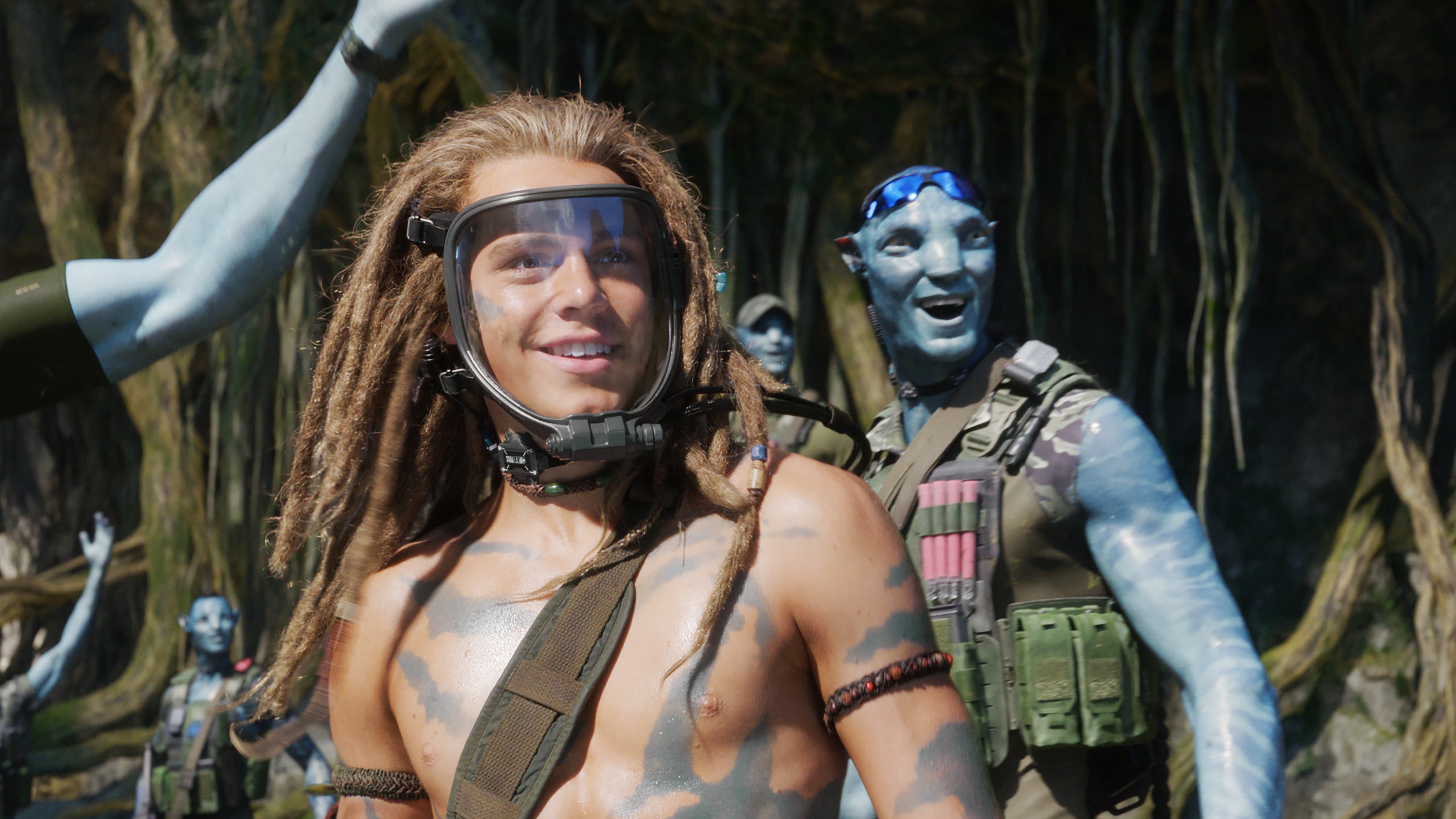
“We would make the decision: which is the path of least resistance to give Jim back his plate exactly as he shot it? And sometimes the savings were too great not to go digital [...] But obviously there was still a lot of work to be done there. For the camera team to create matchmoves that are accurate enough to hold up in 3D movies, there’s a real challenge in that. And they did amazing work on this film to reconcile some of those situations for us.”
Animation 101 with Wētā FX
As someone whose team was “largely responsible for everything that moves” in The Way of Water, Barrett is among the few people who can give an informed answer to the question: how the heck did Cameron pull this off?
If you’ve seen any of the film’s behind-the-scenes featurettes, you’ll know that the processes involved in bringing the entirely fictional world of Pandora to life on screen must have been mind-bogglingly complex. So, naturally, we asked Barrett to explain – in layman's terms – how Wētā turned the likes of Kate Winslet and Cliff Curtis into 10-foot, water-dwelling Na'vi.
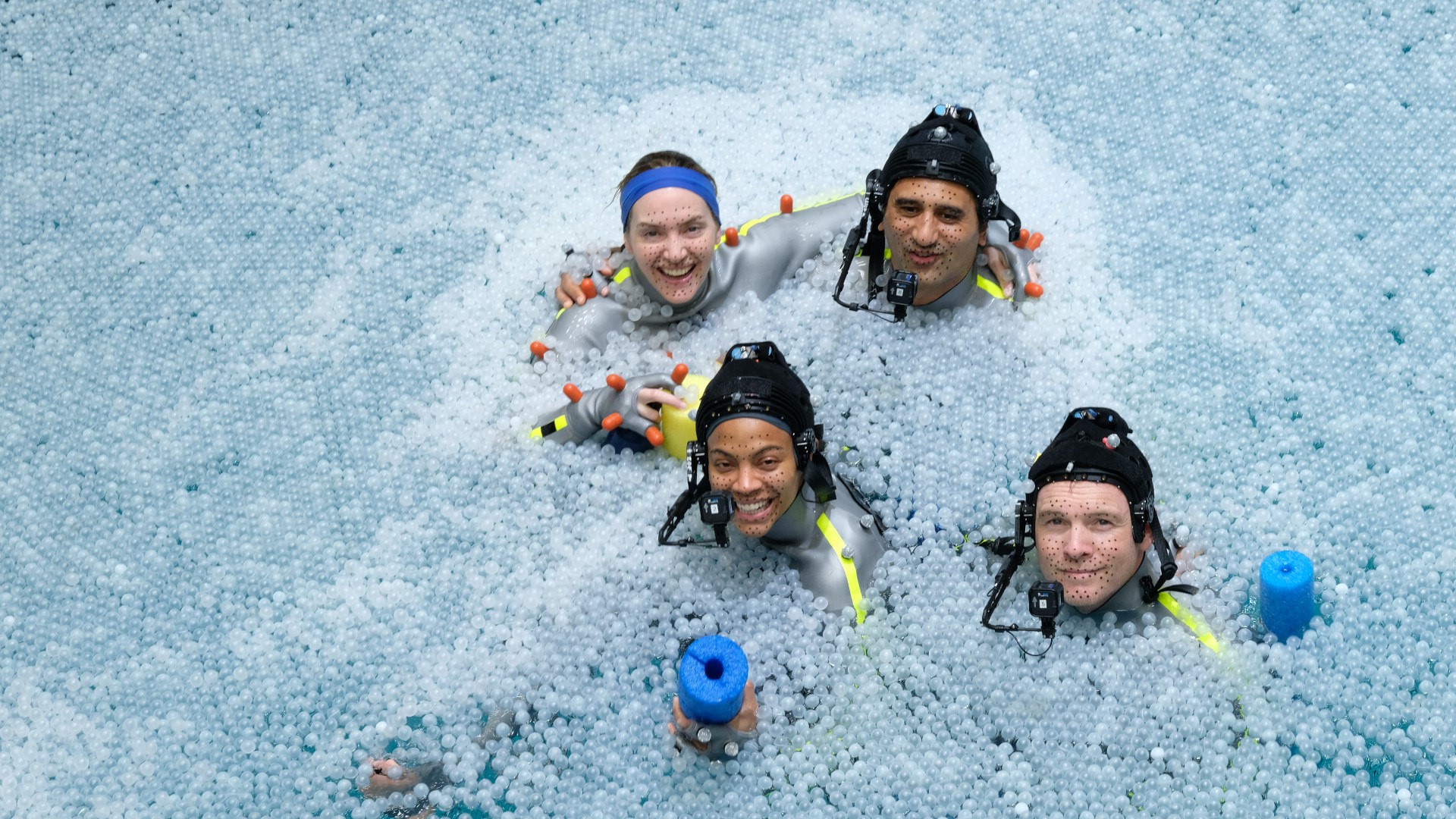
“The way we broke it up,” he begins, “there were certain teams for certain sequences, but we also have specialist artists. So, for instance, we have a facial team, who did the lion's share of the facial work, and they sit as a separate department. We have a motion edit team whose starting point is the performance capture data – obviously, they did a huge amount of work on this film. Then we have the animation team, who do a little bit of everything – they’re responsible for all the creatures, vehicles and things like that. And we also have a crowds team, who deal with the bigger crowd [animations], whether it's fish or birds or Metkayina at a village. So all of those groups of people, in those departments from what we call the motion realm, totalled about 150 at our peak.
Your facial animation will fall over if you don’t have a very accurate version of the performance.
Daniel Barrett, Wētā FX
“So the motion capture is captured – the bulk of that was done at Lightstorm [studios] – and [the footage] is then selected by Jim, whatever he likes,” Barrett continues. “Then it’ll be turned over to Wētā, where it comes through the motion capture team. The data tracking is done at Lightstorm, but we like to re-track it to make sure we maintain all the fidelity and detail of the performances. That will then go through to the motion edit team, who begin work on the bodies – and there’s sometimes a bit of cleanup involved in that [stage]. The motion edit team – also sometimes the animation team – will deal with the bits and pieces that you don’t get to capture," Barrett explains, giving Na’vi fingers and tails as examples.
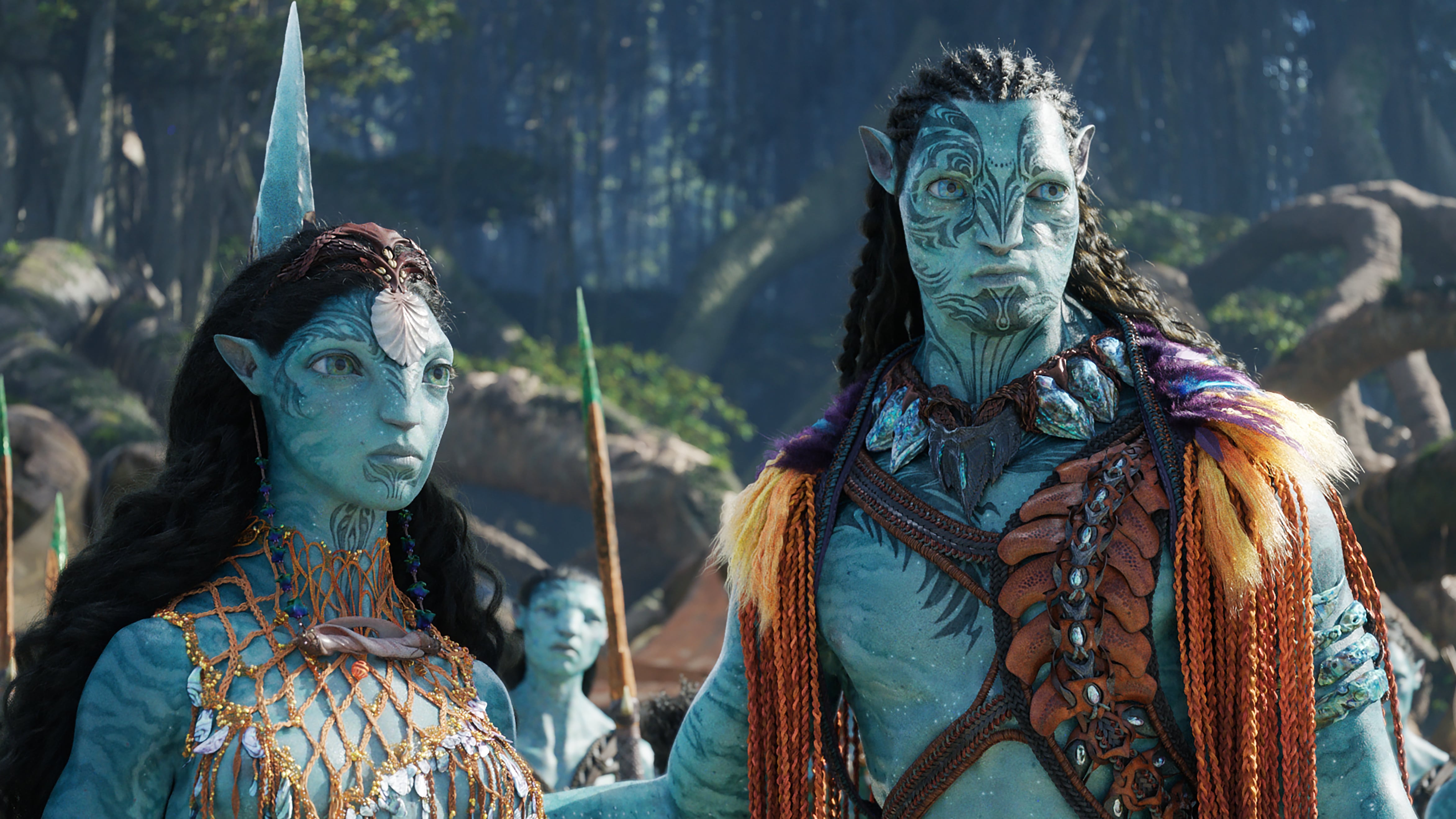
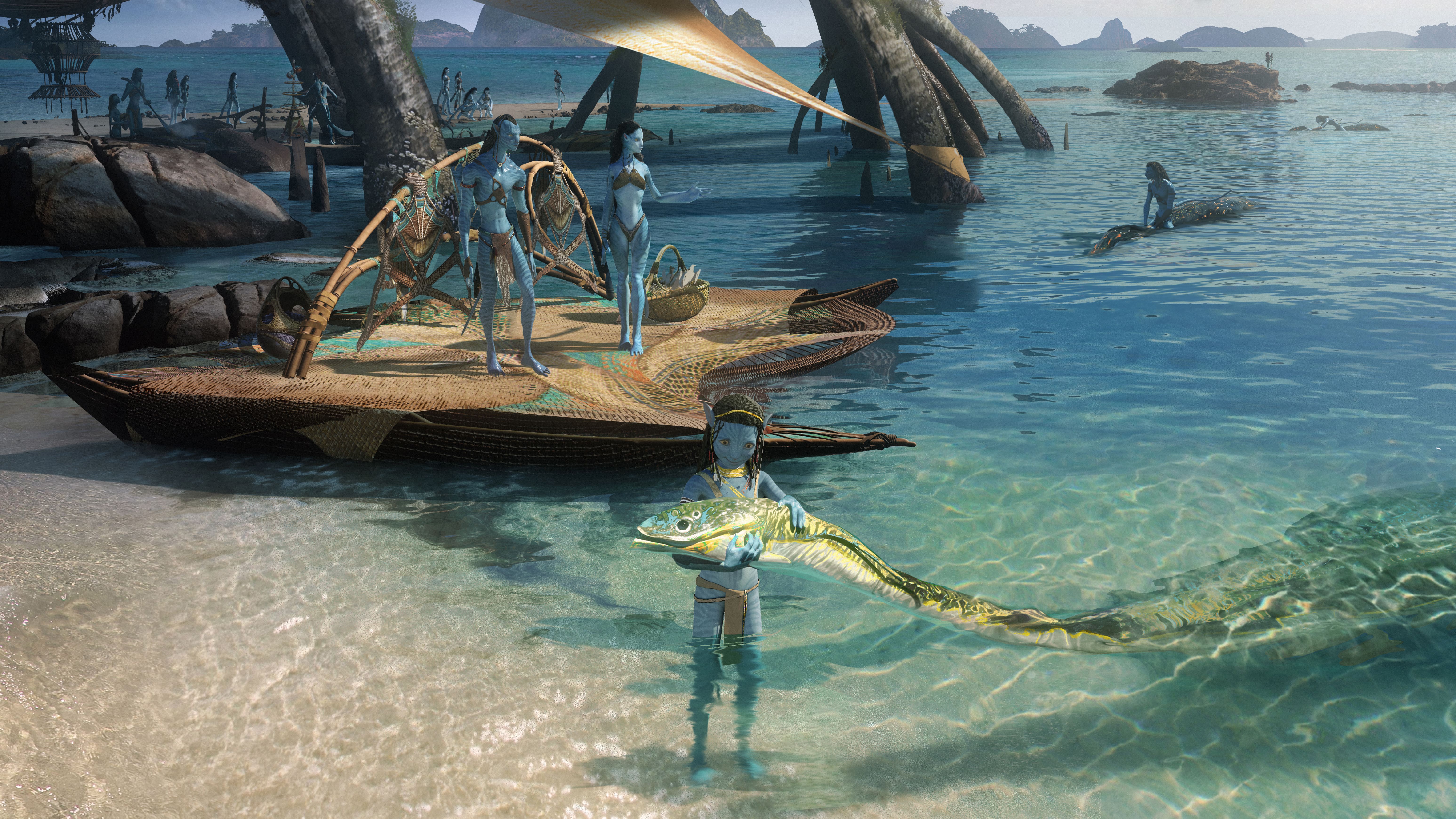
“We like the bodies to be pretty much done before we move to facials – and on that note, there’s a huge amount of attention paid to what the head is doing, because your facial animation will fall over if you don’t have a very accurate version of the performance. Once that’s done, we move to facial [animations] – although sometimes, if we realize we’ve missed something with the head, we have to push it back one step. And that’s pretty much the process for performance capture, [with regards] to the motion team.
“Obviously, beyond us,” Barrett adds, “there’s an awful lot of work done prior in terms of the models, the rigging of the characters, the shading and the textures. But once the motion is there, the footage goes through the creatures team, who simulate cloth, costume and hair. And then of course we’ve got a very clever lighting team who work their magic, which is always such a wonderful thing. To see these characters finally rendered… oh, it’s just such a thrill. To have been working on something that looks a little cartoony and then see something that looks like the real thing. It’s such a pleasure, such a gift.”
Judging by The Way of Water’s near-$2 billion global box office receipts, audiences are enjoying the pleasure, too.
Avatar: The Way of Water is now playing in theaters worldwide.
Comments