The annual prestigious German hi-fi show, High End Munich, is the stage Dali has chosen to launch its new IO-12 "state-of-the-art headphones delivering true hi-fi sound" and they're stunning lookers – easily as gorgeous as most of the best over-ear headphones around today.
They come from strong stock, too; while TechRadar's reviews of Dali gear hone in the brand's more heritage speaker output, my tenure at our sister publication, What Hi-Fi?, saw me help review the 2019-issue Dali iO-6, Dali iO-4, the Danish audio specialist's first ever foray into the world of wireless over-ear headphones. Why mention this? Because for an inaugural effort, those cans were nothing short of excellent for detail, finesse and form, marred only by a fractionally over-cautious delivery that lacked an extra ounce of punch for the price.
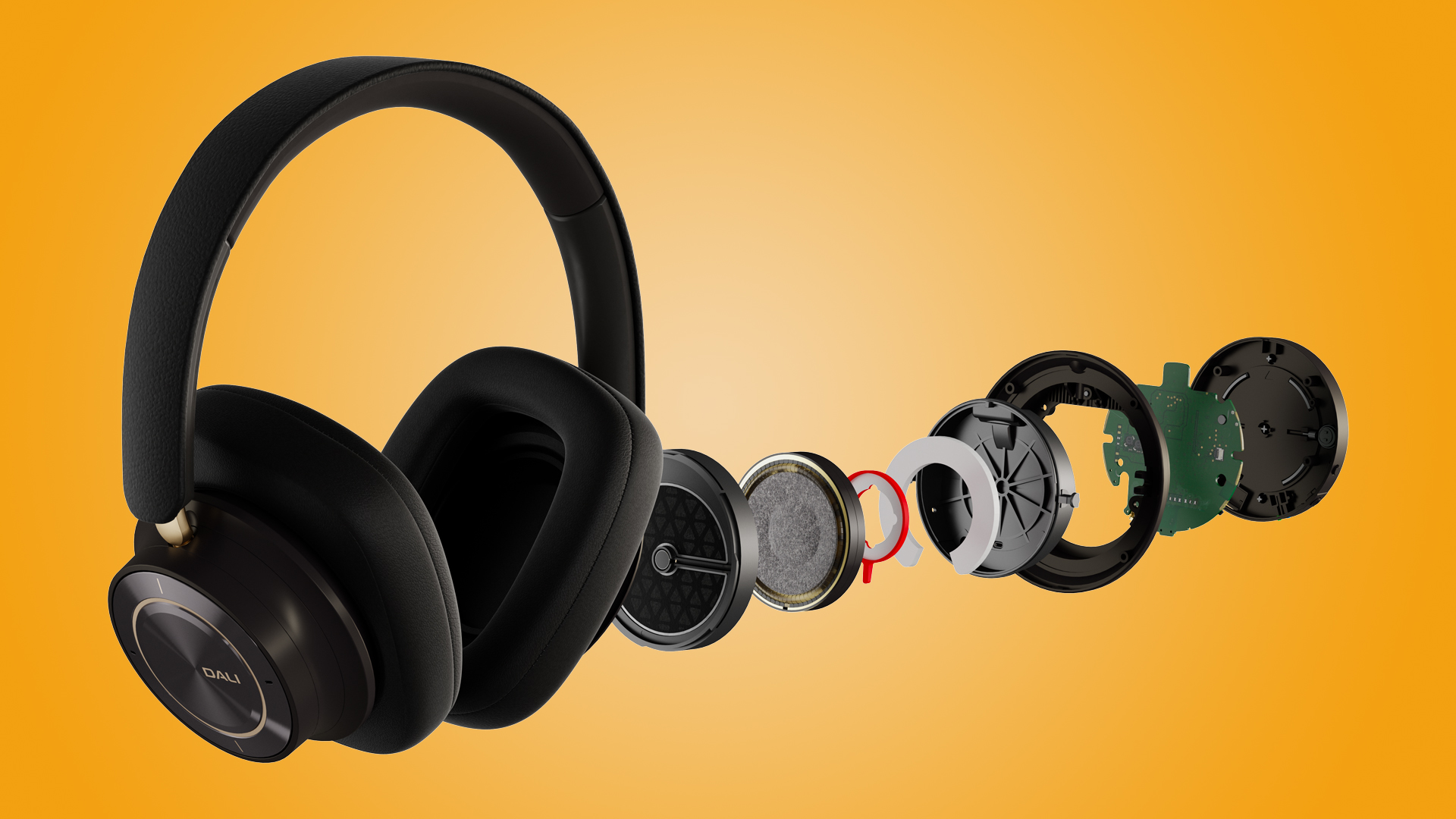
Cut to May 2023 and enter (to no small fanfare) the new Dali IO-12 over-ear wireless headphones, toting 50mm custom drivers, active noise cancellation, aptX Adaptive support and to top it all off, USB-C (read: wired) hi-res 24-bit/96kHz audio.
They're also the world's first headphones to feature Dali's patented Soft Magnetic Compound (SMC) magnet system. Let's dig into that, because although it uses the same material found in Dali's high-end speakers, to understand it you need to know about 'hysteresis'. When using conventional magnets in a speaker design, said magnets can introduce an unintended resistance to the voice-coil, which can lead to unwanted distortion in the audio signal, aka hysteresis. It's not an unusual phenomenon at all.
Dali's SMC technology combined with the company's signature paper fibre cones promises to significantly reduce hysteresis and lower uneven harmonic distortion drastically. The aim, of course, is crystal-clear sound with ultra-low distortion, and better depth and musicality.
And Dali isn't backwards about coming forwards on all of this, telling me, "By applying SMC to the IO-12s we have essentially achieved electrostatic levels of midrange clarity." Dali is referring to electrostatic speakers, which use a totally different kind of technology that's a huge step up in detail, but also in price – and they're hard to drive.
For audiophiles, the Dali IO-12 headphones have been designed to be used either wired or wirelessly. Thanks to both aptX Adaptive Bluetooth plus supplied 3.5mm mini-jack and USB-C cables, you can listen to your music from a host of devices including the best smartphones, the best hi-res audio players, PCs, games consoles and more. When using the supplied USB-C cable, dependent upon source and device, audio can be listened to at up to 24-bit/96kHz hi-res quality.
Opinion: Dali has stuck to its morals and gone app-free for its 2023 over-ears, and that could be an issue
Dali is arguably best-known for its speaker lines drawing on an impressive 40-year heritage, including the stunning 2018-launch Oberon and 2017 Spektor ranges (although the newer 2022 Dali Katch G2 was also a belter of a Bluetooth speaker) and the company has chosen to stick to its guns with a simple, app-free operation here. But is that enough in 2023?
Users can of course skip tracks, adjust the volume and more using the IO-12's integrated buttons, but will this hold up in an ever-crowded market where in-app EQ tweaks, sound zones, sidetone and hearing tests are being shown off left right and center? I'd wager that if the sound is good enough, listeners will forgive the omission of a companion app – but only if the sound is exceptional.
The battery-life is good too, boasting 35 hours of fatigue-free listening, and thanks to the high-quality integrated microphones, you should be heard clearly when making hands-free calls or voice-controlling your compatible device.
Interestingly, the Dali IO-12 offer two sound profiles for listening to your music too. Want to listen to your music as the artist intended and leave any additional sound profiles well alone? No problem. But perhaps you're after a more punchy, bass-focused performance? The IO-12's tailored 'Hi-Fi' and 'Bass' sound modes offer a novel choice.
Vegans take note: the foldable design features a real leather headband along with those beautiful oversized square ear-pads.
Pricing? Of course (brace yourselves): $1,499 / £999, which is around AU$1,870, so very much at the top end of the best headphones on the market and more expensive than even the Focal Bathys or Bowers & Wilkins PX8 – but not quite as dear as the Meze Audio Liric.
Comments